
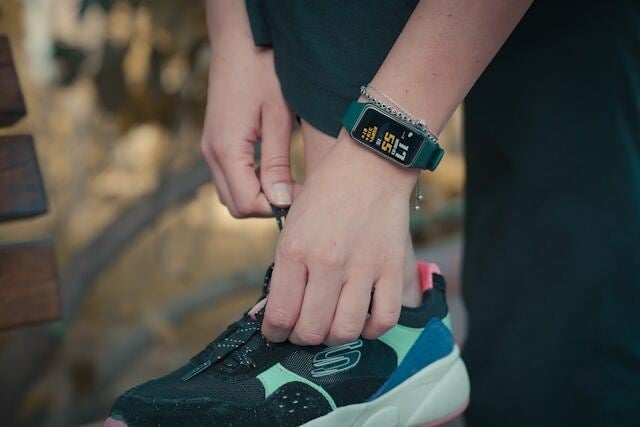
Wearable fitness devices, such as fitness trackers and smartwatches, are increasingly used for tracking health metrics and physical activity, offering health benefits but also presenting new legal implications in personal injury law cases. These devices collect data like heart rate, GPS location, and step count, which could prove or disprove injury claims. Courts, lawyers, and insurance companies increasingly rely on this data collection when reviewing personal injury claims cases, raising concerns about privacy and data integrity. Misinterpretations of data integrity concerns and potential misuse of data collection tools compared to GPS/WiFi data collection could also arise.
Wearable technology can provide valuable evidence in determining the severity of an accident, such as comparing a plaintiff's fitness tracker to someone who isn't, or demonstrating a decline in activity following an incident as digital health data can be objective evidence in cases disputed between witnesses. This can help insurance adjusters and defense attorneys counterclaim or demonstrate the impact of injury on daily living.
Wearable devices present unique context issues. Data that can be obtained from such devices may not always be reliable or complete when not correctly interpreted. Fitness trackers, for instance, cannot show whether a person was experiencing pain while walking slowly, needed assistance, or was wearing one at all times. Devices can still record movement data even after its owner no longer wears them and could distort results further. Any inaccuracies found could impact legal outcomes adversely. Cases involving complex injuries often necessitate expert witnesses who interpret and explain data within its wider medical and legal context.
Wearable fitness technology and injury law are interconnected, with users expecting their data to remain private. Legal proceedings often request this data for compensation claims, and devices could be subject to discovery. Legal teams must balance consent, privacy expectations, and admissibility, especially when wearable data includes sensitive health or location data beyond its original purpose.
Wearable technology can be used in settlement negotiations to analyze long-term trends of an injury's impact on an individual's lifestyle. Insurance companies can make settlement offers based on these trends. Wearable tech may show declines in movement, workouts, or heart rate variability, potentially supporting claims of pain, depression, or anxiety. However, insurers can counter with data showing normal activity levels shortly after the accident. Careful management of data outputs is crucial in such situations.
Legal professionals must understand the growing role of wearable technology in evidence, such as fitness devices, in court proceedings. This information can be easily accessed and scrutinized by court officials and police. It should be authentic and not altered tamper-wise before being presented alongside medical records and expert opinions. Without professional insight, conflicting reports or diagnostic imaging may raise suspicion among courts.
Integrating wearable fitness technology into personal injury law presents both opportunities and challenges. Wearable devices offer objective insight into an individual's health before and after an accident, which may have an incredible effect on legal outcomes. Data accuracy, context, and privacy issues must all be managed responsibly; legislation needs to reflect an increased reliance on wearable data as evidence in legal disputes.
For inquiries related to traffic accident laws or injury laws, or to hire an accident attorney, contact the legal professionals of Bautista LeRoy LLC through this number 816-221-0382 or email them at [email protected]. Serving Kansas City, MO and KS as well as surrounding areas of Benton County and St. Louis.
Summary
Wearable fitness devices are increasingly becoming popular in today's digital era. These are electronic gadgets that are worn to track physical activities and monitor health metrics. Many people are using this without really giving a second thought. Some wearable fitness devices do the following things:
- tracks steps, sleep, heart rate, etc.
- tracks running activities and other outdoor fitness activities
- tracks calories and activity levels
- measures strain, sleep, and recovery
- tracks ECG
Companies that manufacture wearable fitness gadgets are legally required by law to keep the users safe as much as possible. One of the official departments that the company needs to abide by is GDPR (General Data Protection Regulation), a comprehensive privacy law enacted by the European Union. Applicable to companies worldwide that handle data of EU residents, GDPR regulates the collection, storage, the processing, and sharing of personal data. This law protects individuals from potential data breaches and gives them greater control over their data, which includes the right to restrict its use, the right to access, correct, or delete it.
Another law in the United States that protects the privacy and the security of the individual's medical information is HIPAA. This is a standard privacy law for healthcare providers, insurance companies, and other related organizations. It was enacted in 1996. While allowing the necessary flow of data for treatment and insurance reasons, HIPAA ensures that personal medical records are kept confidential and secure. Violations of HIPAA can result in significant fines, legal actions, and distrust of healthcare.



Comments
There are no comments for this post. Be the first and Add your Comment below.
Leave a Comment