
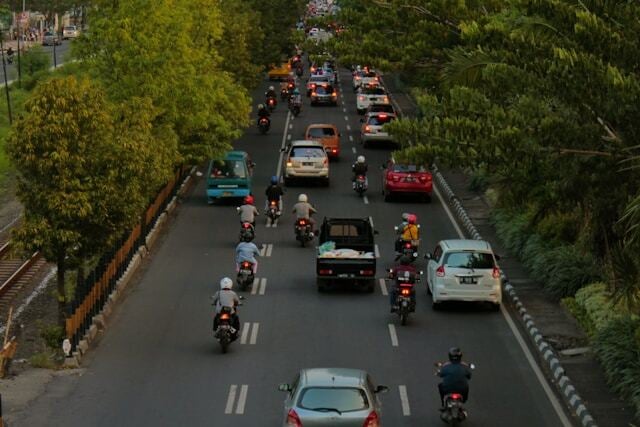
When a motorcycle rider go between lanes that are either stopped or moving slowly, it has long been an ongoing debate in the United States and worldwide. Although it has been legalized under certain conditions, some consider it illegal and dangerous. When involved in accidents involving lane splitting, it can become even more complex. It's vital that injured parties understand their rights in such instances.
What is Lane Splitting (Whitelining)?
Lane splitting occurs when a motorcycle rider moves between two lanes of cars in traffic jams or at red lights. Some view lane splitting as an effective way of escaping traffic, while others perceive it as dangerous. The legality of lane splitting depends on every state and could have serious ramifications if it cause an accident.
Are You Wondering if Lane Splitting is Legal in Your State?
California will remain the only U.S. State where lane-splitting is legally and statutorily sanctioned until 2025, while Arizona, Utah, and Montana allow "Lane Filtering", an adaptation of this practice that's permitted when traffic is stopped or moving at low speeds; other states prohibit or do not clearly define its use within their traffic codes.
Legal status is a crucial component in assigning liability. You may be more protected if you reside in a state that allows lane splitting legally; should an accident occur while engaging in unlawful lane splitting activity, your chances of successfully proving it increase substantially.
Motorcycle Riders' Legal Protections from Lane Splitting Accidents
Riders of motorcycles have the right to compensation should they become involved in an accident, whether or not they lane split, though legal protections depend on various factors.
- State Laws to Consider: It can strengthen your case if you comply with all the laws that pertain to lane splitting in your state, making your actions seen by law enforcement and insurance companies as reasonable, thus increasing clarity about who the other driver is liable to be.
- Comparative Fault Rules: Rules are located in most states, and comparative negligence rules apply in accident cases involving motorcyclists. Even if they were partially at fault for lane splitting, they can still receive damages at a reduced percentage of total compensation. For instance, if 20% at fault is established, they can still receive up to 80% total.
- Driver Negligence: A motorcyclist could still be held liable in states that prohibit lane splitting. Any driver who was distracted, failed to signal their lane change request properly, or became aggressive toward them could be held responsible. More important is considering the entire context of an accident, rather than focusing only on lane splitting.
After a Lane Splitting Accident
It's crucial that you know your rights if involved in a lane-splitting crash:
- Document the scene by taking pictures or videos.
- Get medical care immediately, even if injuries seem minor.
- Request a police report
- Avoid admitting fault on the scene.
Attorneys who specialize in motorcycle accidents cn help you understand lane splitting laws. They can help you build your case and negotiate with insurance companies that might offer low settlement offers. Though lane-splitting laws vary from state to state, being educated can make all the difference in case of an accident. Working closely with an excellent legal team can help you get maximum compensation.
Contact Bautista LeRoy LLC at 816-221-0382 or email them at [email protected] for assistance. Serving Kansas City, MO and KS as well as surrounding areas of Benton County and St. Louis.



Comments
There are no comments for this post. Be the first and Add your Comment below.
Leave a Comment