
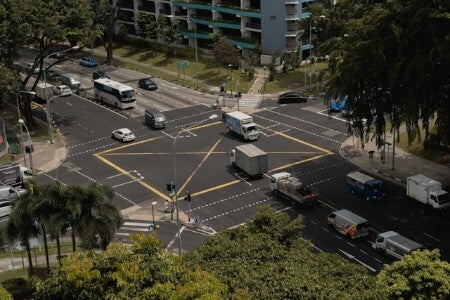
Intersections on roads are complex and dangerous spaces where drivers, cyclists, and pedestrians converge, creating unpredictable dynamics. To maintain traffic flow and prevent collisions causing serious injury or death, traffic rules of right-of-way are necessary. These rules have serious legal implications, especially in personal injury law cases, if not understood properly.
Right-of-way is a legal right for drivers to pass through intersections ahead of other motorists without causing conflict or considering those coming straight through when making left or right turns. These rules are designed with safety in mind, ensuring predictable vehicle movements. For example, at four-way stops, the person arriving first gets priority driving. In uncontrolled intersections, drivers must yield to those on the left and yield to straight-through vehicles when making turns. These guidelines contribute to a safer driving experience for all involved parties, ensuring a predictable and enjoyable driving experience.
Right-of-way laws should never be broken as this puts individuals and vehicles at increased risk of collision at intersections. Angle or T-bone accidents tend to be more prevalent at intersections and often result in serious injuries. Sudden crashes often leave drivers no time or reaction space before impact zones on vehicles' sides provide less protection than front or rear collisions do, which in turn may result in internal injuries and broken bones for victims and lead to lengthy recovery times for them.
Legally, drivers who breach right-of-way rules could face personal liability for failing to obey them and yield right-of-way laws and cause accidents and may be held financially responsible for damages such as medical costs, lost wages, and pain and suffering. If this violation takes place near children or construction sites there could also be additional sanctions such as fines, suspension of licenses, and criminal charges that apply.
Insurance claims from intersection accidents often begin by determining who was at fault, including right-of-way violations and traffic camera footage that helps pinpoint who did what. Police reports, witness testimony and footage can all aid in ascertaining exactly what transpired and who should bear responsibility. Reconstruction experts may even be called in in cases of contention to assess vehicle positions and damage patterns before assigning responsibility and compensating injured parties accordingly.
Intersections present drivers with an opportunity to take proactive steps and prevent accidents. Slowed driving speeds, scanning all directions for potential threats, and entering intersections consciously are just the start. Even when drivers believe they have the right-of-way, remaining aware of other drivers who could act unexpectedly is key in helping avoid collisions. At busy crossings, defensive driving practices like covering brakes and making eye contact are further steps that could enhance safety.
Education plays a crucial role in reducing collisions at intersections. New drivers may misunderstand right-of-way rules, especially those without experience or who haven't reviewed traffic laws since receiving their licenses. Driver's education courses, public awareness campaigns, and refresher classes all can contribute to creating greater understanding and alleviating confusion for drivers on the roads.
Intersections are dangerous due to multiple roads intersecting, requiring increased awareness, good judgment, and knowledge of right-of-way laws. Obeying traffic regulations and driving safely can prevent accidents. Right-of-way law plays a crucial role in determining fault and providing justice in incidents, requiring both motorists and lawyers to acknowledge its role in promoting road safety and legal accountability. Contact us today at 816-221-0382 or send us an email on our Contact Page. Serving Kansas City, MO and KS as well as surrounding areas of Benton County and St. Louis.
Summary
Right-of-way refers to the legal right of a driver, cyclist, or pedestrian to move first in a specific situation or direction. Right-of-way is very important in keeping the road safe and organized. It is necessary to understand and follow right-of-way rules in order to prevent accidents, avoid confusion, and improve the flow of the traffic. Right-of-way includes practicing caution and courtesy. It is still important to stay careful and watch for possible mistakes made by other road users. It is important to be respectful and patient on the road for the safety of everybody.
Right-of-way is very important because:
- it reduces confusion among road users
- it prevents collisions and traffic accidents
- it protects vulnerable road users such as pedestrians, cyclists, etc.
- it improves the smooth flow of traffic
- it encourages responsible and lawful driving behavior
- it allows emergency vehicles to immediately reach destination
The basic right-of-way requirements include:
- follow traffic signs, lights, and traffic officers' instructions
- drivers must yield to pedestrians crossing at proper crosswalks
- yield to emergency vehicles with sirens and flashing lights
- if another user has the right-of-way, yield when making turns
- give way when entering a main road from a side road or driveway
- follow local right-of-way rules at intersections


Comments
There are no comments for this post. Be the first and Add your Comment below.
Leave a Comment