
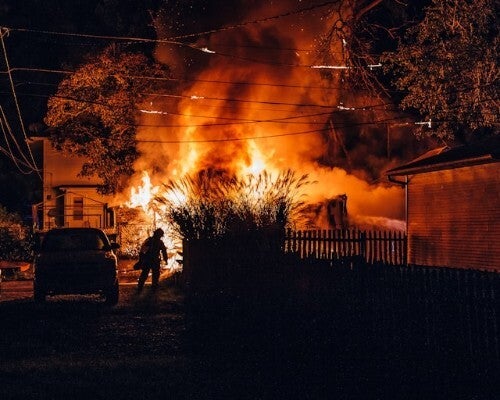
Fire can have serious legal and financial repercussions that are complex to navigate due to its dual scope. Tort law and property insurance both play a part in determining liability, compensation, and recovery for victims of damage. Property insurance typically serves as the first line of defense for property owners while tort law steps in when there's evidence of negligence that led to or caused the blaze.
Tort Law and Fire Damage
Tort law is a civil law branch that governs wrongs or injuries committed against one party by another party and seeks compensation in exchange. When applied to fires, tort law can also address negligence issues. If it can be proven that someone or entity was at fault in starting or contributing to a fire they could potentially be held liable for its effects.
To establish negligence in a fire-related claim, the plaintiff typically must establish four elements:
- Care Obligation: The defendant had an obligation to care for the plaintiff.
- Breach of Duty: If a defendant breaches his or her duty through action or inaction, this constitutes a breach of duty.
- Cause: The fire was started by an electrical breach.
Damages the plaintiff has sustained real losses. If a landlord fails to maintain his electrical wiring properly and a faulty system causes a fire on his or her property, his tenants or neighbors could sue in tort for damages. Furthermore, manufacturers could be held liable under product liability theories when defective appliances or equipment cause fires. Arson falls under another category known as intentional torts and can result in both criminal charges as well as civil liability.
Property Insurance Policies to Cover Fire Damage
Insurance provides financial security against financial loss caused by risks such as fire. Policies cover this hazard for homeowners, renters, and commercial property owners alike. A standard property insurance policy compensates the insured for cost to repair or rebuild the structure, repair or replace personal items.
Liability insurance protects others in case of injury or property damage to others. Policyholders must promptly report an incident, cooperate with the insurer's investigation of it, and submit documentation about their loss. Insurance companies may conduct their investigation to ascertain coverage. If an insured was suspected of arson and their claim denied due to fraud exclusions or intentional acts.
Tort Law and Insurance
In the event of third-party damage to property through negligence or misconduct by its owner, his insurer can pay initial damages before seeking subrogation (acting as agent for the insured and seeking reimbursement from the responsible party). Subrogation allows them to act in place of their insured client to seek reimbursement from negligent parties.
Tort law and insurance go hand-in-hand. An insurer must use tort principles to prove negligence by third parties to recover its losses, while property owners without sufficient coverage or an inadequate policy can pursue legal action directly against those responsible.
Tort claims can help recover losses that aren't covered by insurance, such as sentimental goods, emotional distress, or punitive damage in cases of gross negligence and intentional harm. Property coverage typically only extends to economic losses specified in its policy.
Tort law and property insurers are both involved in fire-related property damages. Tort law serves to hold wrongdoers accountable, while insurance provides financial security for property owners, insurance companies, and lawyers involved with fire loss cases. Property owners, insurance companies, and lawyers can better navigate fire loss cases by understanding both systems. Doing so ensures justice is served when fires can be avoided as well and appropriate compensation is received when necessary.
For inquiries related to accident laws, or to hire an accident/injury attorney in Kansas City, contact the legal professionals of Bautista LeRoy LLC by dialing these numbers 816-221-0382 or by emailing them at [email protected]. Serving Kansas City, MO and KS as well as surrounding areas of Benton County and St. Louis.
Summary
Situations can easily get complicated when a fire breaks out and causes damage. And when you start looking at both insurance and legal responsiblity, you would probably think things will be so overwhelming. This is where Tort Law and property insurance becomes significant. Tort Law is about determining who is at fault when someone is injured or suffers damage. Property insurance, on the other hand, helps cover losses, such as damage to a property or belongings, Insurance helps victims get financial assistance for repairs or replacement. However, if they find that someone else is at fault, they might try to recover the amount they paid out.
Here are the key questions people ask when dealing with fire incidents involving Tort Law and property insurance:
- what caused the fire (negligence, accidental, or intentional)
- was there any failure to provide safety measures?
- who will be legally responsible?
- is there evidence how the fire started?
- does the property owner have valid insurance coverage?
- what exactly does the insurance coverf and what are the exclusions?
- how much damage was done to the property or belongings?
- has there been any claim already with the insurance company?
- could the insurer pursue "subrogation" against another party?
- are there injuries involved?
- who will cover the medical costs?
- is expert investigation needed?
- were local fire codes or safety regulations violated?
- is a settlement possible or will the case likely go to court?
- what deadlines apply for filing insurance claims or legal cases?



Comments
There are no comments for this post. Be the first and Add your Comment below.
Leave a Comment