
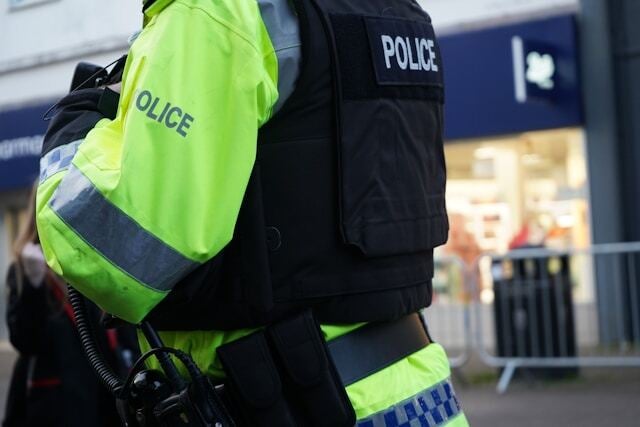
Traffic police form an integral component of accident law and road security framework. Their presence not only shows solidarity among all road users but is crucial in preventing collisions and upholding legal standards governing road behavior despite existing legislation. Traffic officers act as key intermediaries between policy and practice to maintain control on increasingly congested rural and urban road networks.
Traffic police officers enforce traffic laws through regular patrols, sobriety checks, speed monitoring, and red-light supervision. They deter reckless drivers, correct dangerous driving behaviors like speeding and distracted driving, and issue fines or warnings. These actions help reduce serious accidents and fatalities on roadways, ultimately reducing the number of accidents with fatalities on the road.
Education is also of great value: traffic police work alongside media outlets, schools, and community groups to educate the public on safe driving practices and traffic rules. Officers also implement preventive measures, including awareness campaigns on seatbelt use and pedestrian safety as well as mobile phone use while driving. Such initiatives receive added weight by being made the responsibility of those within authority, creating a culture of safety across all drivers - whether beginners or veterans alike.
Traffic police are crucial in enforcing traffic laws and providing valuable insights into road design. They identify traffic flow issues and "black spots" that can lead to accidents. This data is used by urban planners and governments to redesign intersections and install traffic calming devices, thereby improving road safety. Their real-time data is integral to adaptive infrastructure improvement plans.
Traffic police play an essential part in the legal and procedural aftermath of accidents. As they tend to arrive first on accident scenes, traffic cops play an invaluable role in providing assistance and care to injured parties while simultaneously compiling official accident reports that can help determine liability, support insurance claims, and provide evidence in court proceedings. Their thorough and objective documentation often has a dramatic effect on how civil lawsuits or criminal prosecutions arise from traffic accidents. Their work maintains the justice system's fairness when handling these types of issues.
Traffic officers also play an integral part in managing traffic during natural disasters, emergencies, and special events. Their job entails keeping order during situations of high stress - they coordinate detours for emergency vehicles to take and ensure essential services continue running uninterrupted - all the while being trained quickly in responding quickly to changing situations to minimize any risk to public safety.
Traffic police face many challenges despite their obvious value, such as limited manpower and outdated equipment, along with public opposition and digital distractions, and automated vehicles as technology advances. Officers also must incorporate real-time communications systems and body cameras into their workflow, while adapting by employing data analytics or AI surveillance techniques in order to increase road safety.
Traffic police officers serve more than simply an enforcer role, they're educators and active safeguards of public safety. Their legal expertise as well as infrastructure knowledge helps prevent accidents on both legal and nonlegal roads alike; playing an essential role in keeping roads navigable for everyone's benefit in modern urbanized traffic systems. It pays dividends by investing in well-trained officers capable of saving lives as well as mitigating both economic and human losses associated with road collisions.
For inquiries related to traffic accident laws or injury laws, or to hire an accident attorney, contact the legal professionals of Bautista LeRoy LLC through this number 816-221-0382 or email them at [email protected]. Serving Kansas City, MO and KS as well as surrounding areas of Benton County and St. Louis.
Summary
Without the presence of traffic police, roads could become more chaotic and dangerous. There will be more injuries without traffic officers because their role is very important in keeping the road safe for everybody, motorists and pedestrians alike. Their presence is so essential because without them, the road will be very confusing, and everybody knows confusion on the road can lead to accidents.
Here are some of the roles of traffic police that help maintain the road safety and lower the chances of accidents:
- ensure public safety
- discourages reckless driving, speeding, and other dangerous behaviors
- enforces traffic rules such as traffic signals, seat belt requirements, speed limits, etc.
- help prevent road disputes
- reducing congestion by managing traffic flow at busy intersections during peak hours
- respond immediately to accidents and emergencies
- assist injured individuals and contact emergency responders when necessary
- help clear roads after an accident in order to allow traffic to move smoothly
- secure accident scenes to prevent further problems
- educate people about safe driving habits, traffic rules, and pedestrian safety
- enforce laws against distracted driving and driving under the influence
- monitor pedestrian crossings and school zones
- maintain order and promote safe practices
- increase driver awareness
- encourage responsible behaviors
- conduct road safety awareness campaigns



Comments
There are no comments for this post. Be the first and Add your Comment below.
Leave a Comment