
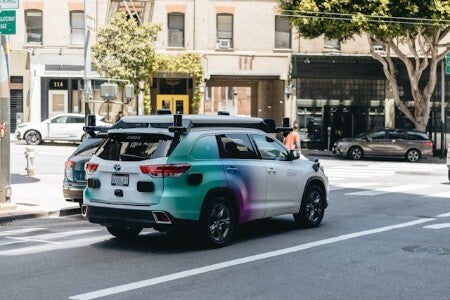
As self-driving vehicles advance beyond experimental stages, questions of legal and ethical responsibility become more pressing. Decisions made by autonomous vehicles in no-win situations involve technological failure, legal liability, moral philosophy, and determining who was at fault. Prioritizing less severe injuries over others is typically guided by human judgment over machine logic, highlighting the need for ethical considerations in autonomous driving.
Contrary to human control systems, autonomous vehicles (AVs) are managed through pre-programmed frameworks using algorithms and machine learning for decision-making. When accidents result from these choices resulting in injuries or fatalities, someone must answer for this act, which creates a unique mix of liability and ethics not fully addressed by the U.S. Injury Law or international legal systems.
Legal scrutiny will primarily target manufacturers and designers of autonomous vehicles, particularly software developers who control decision-making. Product liability laws may apply when a car makes a mistake that causes harm, and manufacturers could be held liable if the harm was predictable and could have been avoided through better programming or design. This becomes more complex when an ethical decision is embedded within the software.
The ethical reasoning behind autonomous vehicles remains unclear in both tech development and law. If software developers made an ethical choice, who would be held accountable? Injury Law is now incorporating philosophical concepts like utilitarianism and moral calculus, which are not typically used in personal injury claims.
Insurance policies are shifting liability from drivers to software developers and manufacturers in autonomous vehicle accidents. This shift has significant implications for policies, premiums, claims processes, and legal representation needs for victims. Legal representatives must understand evolving technologies and shifting liability frameworks to provide proper representation and assistance for AV-related incidents.
An additional issue could arise when autonomous vehicles rely on data provided by infrastructure or vehicles in real-time or share decision-making through cloud networks. When accidents result due to system or incorrect data failures or inaccurate readings, multiple parties including municipal agencies, software providers and data providers could share liability for the incident. Assigning blame can become complex due to joint liability in networked systems.
Additionally, victims in these scenarios can often be difficult to define. What if an AV were forced to choose between two options that both involved harming someone? Should an injured party receive reduced compensation because programming decided their harm would be "lesser?" Legal systems must ensure that ethical reasoning in AVs does not erode individuals' right to seek redress for injuries suffered by individuals.
Injury law must adapt in response to autonomous cars to balance technological advancement with human safety and rights. To hold parties responsible, courts, legislators, and legal professionals must develop new doctrines or adapt existing ones without inhibiting innovation. Transparency regarding how decisions related to autonomous cars (AV) are made will help maintain fairness while building public confidence and upholding trust between all involved.
As society moves into an age of increasingly autonomous transportation, ethical decision-making no longer rests solely with human drivers alone. Engineers, legislators, and courts now bear the responsibility for translating moral questions into legal obligations. Understanding this issue and finding a resolution are vital not just for victims seeking justice but for creating safer mobility in future years.
For inquiries related to traffic accident laws or injury laws, or to hire an accident attorney, contact the legal professionals of Bautista LeRoy LLC through this number 816-221-0382 or email them at [email protected]. Serving Kansas City, MO and KS as well as surrounding areas of Benton County and St. Louis.
Summary
Self-driving cars depend on algorithms to make decisions. This is why determining liability for electric car accidents are also sometimes tricky. Autonomoys vehicles sound futuristic and convenient, but there are many underlying issues about it that needs to be resolved, especially in connection to accidents or personal injury cases. Unlike regular car accidents, where human is usually at fault, electric car accidents are more challenging.
Some of the reasons why it is more challenging to determine accountability in autonomous vehicle accidents are:
- no human driver control
- complex algorithms - it's difficult to understand or explain how the system made a specific decision in a split second
- shared responsibility - liability can be split between different parties such as the manufacturers, owners, regulators, software developers, etc.
- evolving laws - legal systems are still catching up with this technology, therefore rules may be unclear or inconsistent
- lack of transparency - some systems operate in a way that it's hard to trace exactly what happened
- data dependence - decisions can fail or be misinterpreted because they rely on sensors and data inputs
- ethical dillemmas - cars may be set up or programmed to choose between two harmful outcomes, which raises question about moral responsibility
- multiple jurisdictions - different places may have different laws on this technology
- software vs. hardware issues - it can be difficult to tell whether the issue came from coding or physical components
- modifications and updates - software updates can change how the vehicle behaves over the course of time
- insurance gaps - traditional insurance models don't always fit situations where a machine is making decisions
- proof of fault - gathering and interpreting technical evidence usually requires experts and can be time-consuming


Comments
There are no comments for this post. Be the first and Add your Comment below.
Leave a Comment